It was towards the end of my first day of fellowship when my attending and unit director sat me down along with our rotating pediatric residents to give us an orientation to the unit and the month stating, “There are guidelines and there are policies… Policies have to be followed, but guidelines are just recommendations.“
I thought back to the multiple exposures I’ve been lucky enough to have throughout my time as a locum tenens and beyond. I’ve thought back to the variations I’ve witnessed, studied and created from a straight forward black and white path in providing medical care. So many things in medicine are privy to interpretation and it is rare to have an answer that has a unanimous among a multitude of minds. There are “industry standards” or as we would say “standards of care” that we follow to be in line with our governing bodies and to provide care that has strong evidence proven by scientific methods and deep diving into statistics and physiology; however, everything has a little leeway in one direction or another. The duration of an antibiotic course, the use of oxygen therapy, the frequency of lab testing or imaging modalities and even the perfect IV fluids to provide always has a range of options and no single answer is consistently superior or “right.” With experience, we often do tend to cement ourselves into certain habits and ways of practice – routine is after all comforting and a scaffold for decision-making and differential considerations works better in an algorithmic manner. But, maintaining creative thoughts and being open to the changes between the lines that we can individualize to one situation vs the next is one of the best parts of the Art of Medicine.
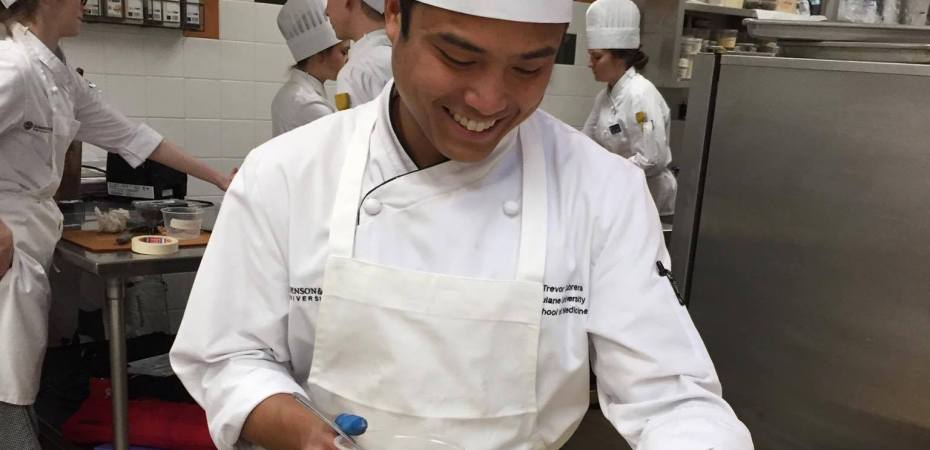
When I was a medical student in New Orleans, LA from 2013-2017, I was lucky enough to be immersed in a world of cooking and food by nature of and involvement with our Culinary Medicine program. The program has since expanded vastly across the country and served to teach medical professionals and lay people alike the nuances of nutrition and using food as a form of medicine – something that western medicine gets a lot of criticism for not focusing on as avidly in the past. During that time, we would host Dietetic Interns from Johnson and Wales University Culinary School in Providence, RI, in turn allowing in exchange the medical students to attend Culinary School for a month – it was obviously amazing and has enhanced and stimulated my interest and passion for cooking even more than already existed. Over the years, while I’ve garnered some more culinary techniques and skills from self-learning and my brief time at culinary school, I have noticed that I tend to follow recipes very loosely. Maybe some of the things I find so fascinating between cooking and medicine: guidelines and recipes have flexibility inherent to their institution and modulating a plan for one or the other can lead to slight differences that might be better or worse depending on the day and the time.
While certain things like baking require following specific formulas (just like writing orders for IV nutrition in the hospital), most guideline recipes offer freedom for some expression. Following line by line orders and guidelines is all a means to an end, and when the final product is ready (or the course of medical care has reached it’s goal), it only matters what comes out on the other side. I constantly encourage my learners to explore different institutions for practice and to learn that one recipe isn’t always the best, even if it might seem like it.
 The Nomadic Pediatrician