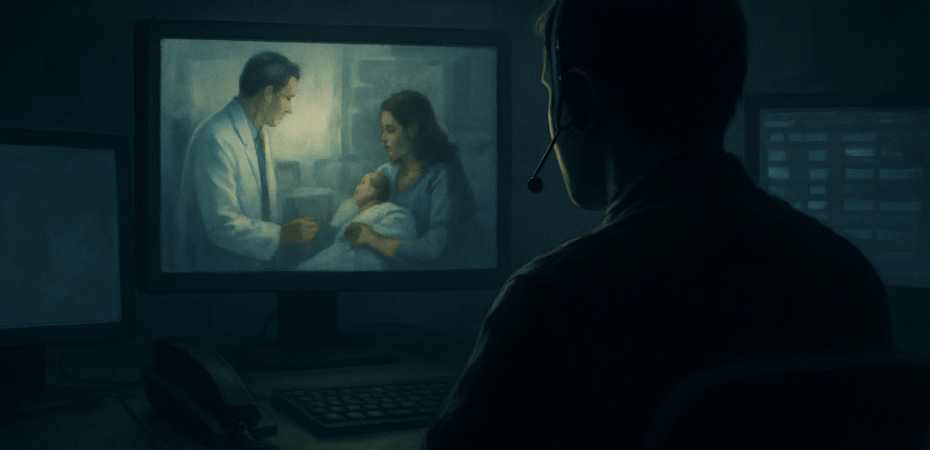
“I’m sorry, there’s nothing more medically we can do. It is time to stop. He is dying.” The interpreter paused, the screen flittering in and out on an iPad in a busy unit as they reverberated the words in Hmong to the confused mother of a brand new baby that had been born too early to save…
I remember listening to one of my Pediatric Oncology Attendings during my Residency Training in Texas tell a scared family one night, “It’s ok, you didn’t sign up for this… We know that… But we did.” One of the phrases I have taken with me and repeated multiple times in a variety of situations. Nobody is ever prepared for the critical situations our health may fall into; most things are unbeknownst to us and ignorance is ever blissful. I have repeated this phrase back to families time and time again, as I work to help them navigate the difficult situations they often face while their loved ones are sick; or, particularly, when their loved ones are about to die. All of us on the ground at the bedside realized at some point the intensity of what we promised to do with our careers – taking care of humans doesn’t always have a good ending. However, among all of the communication kerfuffles and stress in a busy unit or out in the periphery at the small hospitals I once worked at as a locum tenens, one group of our healthcare staff has often, in my opinion, been overlooked: What about the interpreters and the dispatchers? What about those standing by to transmit and listen to the tears, the harsh words, and the silence? Did they know before they came into it, that this is what they signed up for?
At this point in my life, I have had the assistance of multiple interpreters to give bad news, to discuss life-changing prognoses, to break hearts… At this point in my life, I have listened to calls for help on the transport phone as the medical control and have helplessly heard the cries of those out in the world as I instruct them, over the phone, that there is no saving grace I can extend for their patients. You never forget when you tell another colleague far away seeking your help, or a family in distress that it is time for them to stop heroic measures, that it’s time to pause. You never forget instructing a provider on how to give chest compressions and medications over the phone, imagining the terror they feel on the other side, especially when, you used to be that person calling for help… The tears I’ve shed giving bad news to others calling me, gives me visceral flashbacks to the time I was once the one out in the field calling the “destination medical center” for help… But, what about those that listen on the line to all of it? What about those that are forced to process similar feelings of desperation and despair, only as onlookers…
I remember a particularly devastating phone call one night as a Neonatal ICU Fellow when I “ran a code” over the phone and ultimately despite our interventions, had the above discussion with an ER doctor far away, that it was time to forego further resuscitative measures and call a time of death… After, I called the transport center back to talk to the dispatcher/conveyor that had listened in on our entire phone call. I remember calling and saying, “Hey… That was rough… Are you ok? I don’t know if anyone ever asks if you’re ok?” “… They don’t. Yes… Thank you.” She is just as human and just as present as I am.
My job as a Physician is to lead my team, period. My job is to think about the things that are overlooked and to be conscious and aware of the needs of the people I work with, in addition to my patients. To all of us in the healthcare world that are at the bedside or the first responder in tragedy, it is our responsibility collectively to remember every part of our team. My job would be impossible without those in the communication/transport center. Life would cease to be responded to without our dispatchers and despair and confusion would torment anyone for who the primary language of medical discussion in the time of peril hasn’t been voiced in a way that can be understood.
It is important for all of us on the aisle and window seats to be conscious and aware of those in the middle. It is important that we take the time to check in with those that are tasked with one of the most difficult jobs. Between chaos and silence, I forever am grateful for those caught in the middle and forever available to debrief the quiet. No part of my job can function in isolation, so for the interpreters, dispatchers and everyone else in between… You are seen.
Image Credit: ChatGPT
 The Nomadic Pediatrician