Check out my publication of this story from a different perspective in Academic Medicine, “When Saving and Saying Goodbye Become One.“
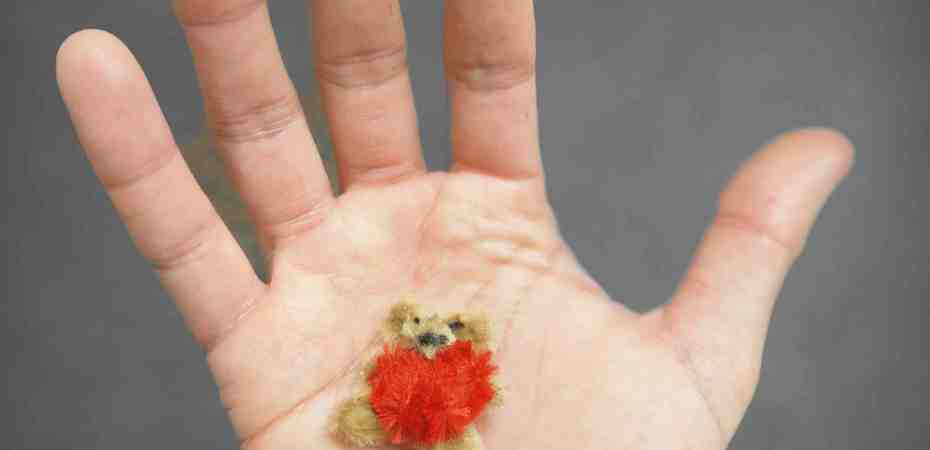
Around midnight on a Tuesday I put my stethoscope up to the chest of a small human being cradled lovingly in the arms of his mother. He was less than a pound in weight and had been born almost 4 months early, and, despite our best efforts, had barely grown over the past 30 days of his life. The room was quiet, the darkness bringing solitude, and the only people in the room besides myself, were the bedside nurse, his mother and his father – the rest of the family waited anxiously in the room next door, respecting the space that was needed. I held my breathe and closed my eyes and I cautiously listened to the universe in that room, focusing deeply for what seemed like hours into the sounds coming from the stethoscope ear buds… Silence. I gently held his small head in the palm of my hand, feeling the warmth leaving his body even through my glove, and slowly removed the stethoscope, “I’m so sorry, [he] has passed. He looks so peaceful.” His father, who I had just one month ago (and exactly 1 year ago today) walked with out of the delivery room, proudly after placing a breathing tube in the smallest baby I had tried to help, on my first attempt and successfully resuscitated, looked up to me and quietly responded with the words that have changed my entire approach to medicine and the world of neonatal intensive care, “Thank you for giving us a chance to meet him.“
*****
It is a rarity for those of us in training or at large institutions with an overwhelming amount of patients and clinical roles, not to mention the non-clinical workload, to often times experience the gravity of taking care of patients in the way I was given a chance to with this small human. It is a rarity to experience the full circle of life so distinctly, and the deep feelings of connection to these moments of vulnerability become etched in concrete in our souls. It is sometimes a rarity to recognize purpose, unless we take the time to reflect and be aware of it.
Throughout the years and throughout my travels both physically, mentally and scholarly, I have evolved multiple times in my thought patterns and reorganization of priorities. My judgements and biases over the years have become things I am more verbal about, and it has helped me to mitigate the times I feel I am making subjective calls on things that should be objective, or vice versa. Technology and science has gone a long way in the last several decades and has now given myself and people like me, an uncanny ability to sustain life and to do things that would have been considered impossible years ago. The ethics, moral principles and ultimate long-term outcomes often elude us and are overwhelmed with too many other seemingly more pressing matters. However, I often have asked myself the why of what I do… Why do we push the boundaries of science and technology when sometimes outcomes may be worse than death… Why do we continue to do things that we aren’t actually sure about being successful.. Why do we keep trying at all?
The concept of “futility” in medicine has become passè and the shift from paternalism to autonomy and patient-involved decision-making has altered the way we approach many situations (but, that’s a discussion for a future post). However, there are many times that internally it creates “moral distress” for many providers. Despite the best attempt of multiple brilliant minds, multiple team members and hours of discussions, sometimes, we are forced to realize the limitations of being human.
It has taken me a long time to understand why we keep going, why we foster optimism even when the odds are impossibly stacked against us. But that night, I realized my purpose—and the answer to the Why. We keep pushing when things become impossible, even if we ultimately lose, because at the end of the day we are human, and honoring that humanity is the very heart of what we do.
In the end, my purpose isn’t just to save life, it’s to stand with it.
 The Nomadic Pediatrician